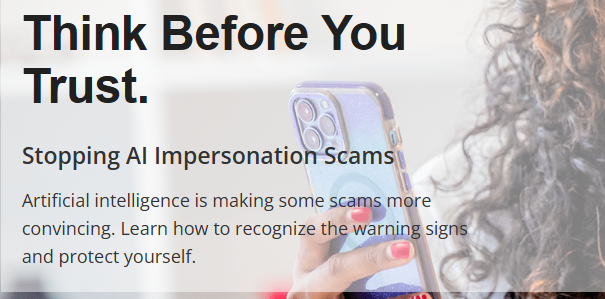
AI can make fraudulent communications look and sound like they come from someone you trust.
UNDERSTANDING THE THREAT – Trust. Urgency. Deception.
These scams rarely rely on sophisticated hacking. Instead, they exploit something far more personal: Trust.
By combining artificial intelligence with familiar scam tactics, criminals can create convincing phone calls, emails, text messages, images and videos that appear to come from someone we know and trust.
The goal is the same: create urgency and pressure victims into acting before verifying the request.
Protect yourself from AI impersonation scams
A few simple precautions can help you recognize suspicious requests and respond safely.
01 Slow down – Fraudsters rely on urgency. Pause before responding to unexpected requests involving money or personal information.
02 Verify independently – Contact the person or organization using a trusted phone number or website rather than replying directly to the message.
03 Create a family verification plan – Establish a code word or security question to confirm someone’s identity during emergencies.
04 Question what you see and hear – Audio recordings, photographs and videos are no longer reliable proof of identity on their own.
05 Limit what you share publicly – Information posted online can help criminals create more convincing impersonation attempts.
06 Talk about fraud – Sharing information with family, friends and colleagues helps others recognize warning signs.
07 Report suspected fraud – Contact your local police service and the Canadian Anti-Fraud Centre, even if no money was lost.
Pause. Verify. Think.
TAKE THE NEXT STEP
Suspect a scam? Report it.
Contact your local police service and the Canadian Anti-Fraud Centre, even if no money was lost.
Canadian Anti-Fraud Centre
You can also report by phone: 1-888-495-8501
Monday to Friday, 10 a.m. to 4:45 p.m. Eastern time, excluding holidays.